Kamis, 31 Desember 2015

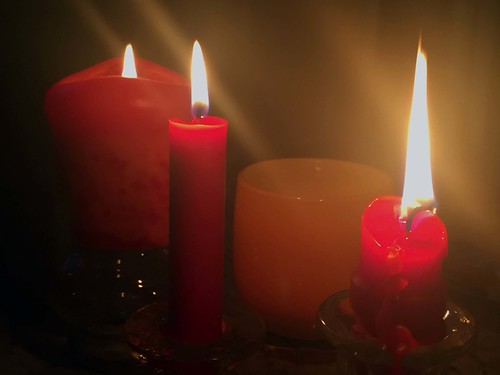
lights for new year's eve

new years lights IMG_4532

I lit these lights in the darkness tonight
In another season, we would still have sunlight
We would have warm air and full gardens
But now it's the New Year and lights sparkle in the cold and darkness,
It's time to reflect and plan for new things.

I very much hope 2016 is a year of peace in the world
I wish 2016 would bring food and happiness for everyone.

For me - I'm beginning to plan my gardens
I have a nice stack of catalogs, circles here and there, a growing list of partially made plans
By the warm glow of candlelight,
I'm imagining a bountiful new season.
I hope 2016 is bountiful for all.

how are you planning your next vegetable garden?

We need a new poll!

I just got the MOFGA (Maine Organic Farmers and Gardeners Association) Newsletter and their top item today is about garden planning software. They site this link for 10 Best Vegetable Garden Software of 2016. Except when you get to the link, it says it was last updated in 2011. Five years ago!!

I wrote to MOFGA, Jean wrote back immediately! and we agree, we need a new review of Planning Software. So, how do you do your garden planning?

Me: I like to use paper and tracing paper. I trace last year's garden, then move around my crop locations. I erase and rewrite. And think about it. Then I make my final draft. Which is never final, because I'll think of something to change. Software is fun to use. Sometimes I use PowerPoint, only because it's on my computer for my business. I can make lots of edits with this. But I like my hand drawings better.

So, two questions, First: Do you use Garden Planning Software? Please use this poll
Do you use Garden Planning Software?
Yes
No
Sometimes
Poll Maker


Second: Have you tried any Garden Planning Software recently? Please leave me a comment and let me know. Maybe Mother Earth News and Grow Veg? I'll put together another poll soon to see what software the readers of this blog like to use.

And, by the way, Happy New Year!

Selasa, 29 Desember 2015

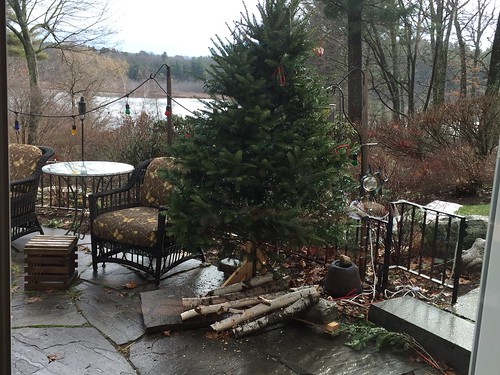
our Christmas tree

There wasn't room for our tree inside this year, because of renovations we are doing, ... so... the tree is out on the patio decorated with lights and bird food.

outdoor christmas tree IMG_4339

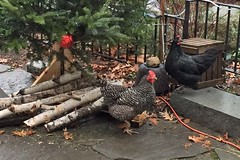
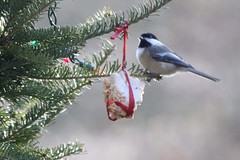
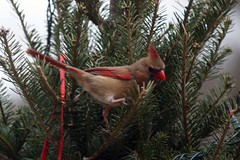
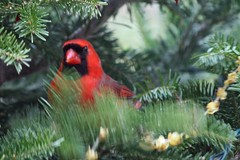
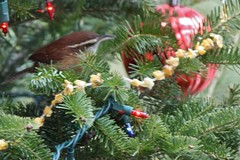
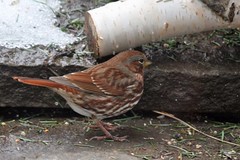
Who came to the tree? First a couple of noisy red squirrels! Then, Suzie (my little Portuguese water dog who loves birds food), my chickens, and then lots of birds. A Carolina wren, junco's, ground sparrows, chickadees, and cardinals.

IMG_4518 - Copy outdoor christmas tree IMG_4715outdoor christmas tree IMG_4741 outdoor christmas tree IMG_4768outdoor christmas tree IMG_4748 outdoor christmas tree IMG_4783

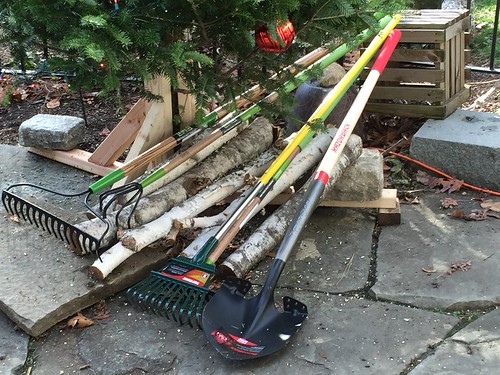
Oh, and Santa came by too. On Christmas morning there was a big pile of new garden tools!! I can't wait to use them all.

outdoor christmas tree IMG_4416

biochar? carbon gardening?

Daphne brought up biochar as the most stable way to sequester unwanted atmospheric carbon. As a nice side effect, it also improves the soil. And Tony explained that my tasty lettuce gardens don't hold onto much carbon very long, but if I added more wetlands, that would. Hmm, carbon gardening - that's new to me. I had to do more research.

The main focus of recent Climate Change Conferences is to reduce emissions, but then, there's a secondary discussion: what to do with the carbon that's already in the air? Biochar is one proposal.

Solutions for the "What to do with it" problem have been divided into biological and chemical approaches. NOFA recommends tying CO2 up in plant/compost cycles. This has the advantage of using a free energy source: the sun. The disadvantage is that we have only the earth's surface for this activity.

Biochar (pyrolyzed organic products that sequester CO2) production is also considered a "biological approach". (I'm not sure why as it doesn't use the sun to do the pyrolyzing, it uses fossil fuel. It just make use of organic products.) Biochar has the advantage of great potential capacity as it can be buried, However, the scale it's used on currently is relatively minuscule.

There are also spectacularly varied chemical methods of capturing CO2 that are being proposed — "from direct air capture using resins, to the use of crushed olivine (a mineral that absorbs CO2 as it weathers) to seed beaches, to new forms of carbon-negative cement-making."

But back to the biochar, it's currently having an impact agriculturally as a soil amendment that revitalizes tired soils. It's not effective everywhere (negative issues include price, affects on soil microbes, and the large volumes that are needed), but in many places it is improving crop production. Like Daphne's garden! (Is that how she grew those beautiful sweet potatoes?)

As far as expanding biochar production to the point where it can impact atmospheric CO2, critics are concerned that land used to grow plant material could displace food crops, they sorry and about socioeconomic effects, and they worry about what eventually happens to biochar in soils - when it does breakdown. They worry that sufficient research has not yet been done.

I like the rational view of Stephen Joseph, a biochar researcher from Univ of New South Wales in Australia, "Biochar probably won’t save the world from climate change, nor is it going to be the key to increasing agricultural productivity everywhere. But used wisely, it is a tool that may help in both situations.”

Personally, I this I'll to stick with NOFA's very biological approach and traditional methods: Cover everything I can with plants (more lettuce!! more clover!!), compost everything I can on site, and use my chickens to enhance my composting. I'm also growing locally - in my backyard - and reduce driving to the grocery store. I hope my little micro-farm is at least a transient a part of reducing atmospheric CO2.

Sources:
NY Times (July 24, 2015) A Third Way To Fight Climate Change
BloombergBusiness (June 8, 2015) Scientists Are Coming Up With 'Last Ditch' Remedies for Climate Change
PBS (July 3, 2015) The Coal That’s Good for the Climate
Senin, 28 Desember 2015

Since I'm a new NOFA member I was reading through their literature. I like this one about Soil Carbon Restoration.
"Much discussion has focused on how to deal with greenhouse gas emissions and resulting weather extremes. Most analysts believe we must stop burning fossil fuels to prevent further increases in atmospheric carbon. [But we} must also find ways to remove carbon already in the air....

"...where can we put carbon once it is removed from the air? There is only one practical approach -- to put it back where it belongs, in the soil.
So here's a list of things vegetable gardeners can do to put carbon back in the soil:
- Plant nitrogen fixing cover crops and living row paths
- Heavily mulch weeds instead of pulling
- Incorporate no-till or shallow till practices
- Replace pesticides and fungicides with diverse beneficial organisms
- Incorporate perennials in our garden
- Compost your garden and kitchen waste
- Recycle biomass with livestock (grazers, browsers, compost to poultry)

And things yard-owners can do:
- Plant lawns with diverse species: deep rooted grasses and nitrogen fixing species like clover
- Incorporate multi-layer, perennial, diverse plantings
- Compost, rather than burn, yard waste
- Minimize pavement and unproductive mulch
- Grow nitrogen fixing trees and perennials
- Maintain diverse forested buffers and perimeters

I think we've all heard about the importance of doing most of these things since we know good soil health is important for our crops. Soil health is also important for the earth. More info is at the NOFA site (NOFA Carbon Soil Restoration).

Minggu, 27 Desember 2015

NOFA

I just signed up for NOFA's winter one-day conference Saturday, Jan 16 in Worcester MA. Anyone else going? Has any been to these before? I just signed up as a new member. It looks fun. NOFA is the Northeast Organic Farming Association. I met a board member the other day and he told me they had lots of programs and resources for organic home gardeners.